Mail:info@iautamech.com Tel : +86 15396309252




Improper operation of a forklift on grade can lead to accidents. It is the responsibility of warehouse managers to ensure that operators follow best practices when driving forklifts up and down these areas to maintain a safe and productive workplace. Follow these six rules to help reduce the risk of accidents at work.
Every forklift manufacturer provides an Operation and Maintenance Manual (OMM). Always read and follow the instructions in the OMM to operate the forklift safely.
The maximum slope a forklift can operate on depends on the type of forklift. Manufacturers provide gradeability ratings that indicate the steepest slope a forklift can climb while carrying a full load. Some forklifts can handle grades up to 40%.
To determine the grade of a ramp or slope, measure its height (rise) and length (run). Divide the height by the length. For example, if a ramp is 5 feet high and 20 feet long, the grade is calculated as follows:Grade=RiseRun=5 ft20 ft=0.25 or 25%\text{Grade} = \frac{\text{Rise}}{\text{Run}} = \frac{5 \text{ ft}}{20 \text{ ft}} = 0.25 \text{ or } 25\%Grade=RunRise=20 ft5 ft=0.25 or 25%
Order pickers are generally not designed to operate on ramps or slopes, and manufacturers may prohibit their use in these areas. Always follow the manufacturer’s instructions in the OMM. If the OMM does not provide guidance on this, contact your dealer for clarification.
Forklifts must be operated at slow speeds on slopes to avoid accidents or injuries. This applies whether the forklift is carrying a load or not.
New forklift operators often ask, “Which way should the load face when going up a ramp?” The correct answer is that the load must always face uphill. This prevents the load from sliding off the forks.
Sudden changes in direction or turning a forklift on a ramp, whether loaded or unloaded, can lead to tipping. Sudden movements can destabilize the forklift.
To prevent tipping, operators should:
While specific rules exist for operating on ramps and slopes, operators should always apply the training, knowledge, and experience they have gained in routine forklift operations.
Our forklift safety training and certification program can help improve operator efficiency and safety. Contact your local forklift dealer to schedule a training session for your company.


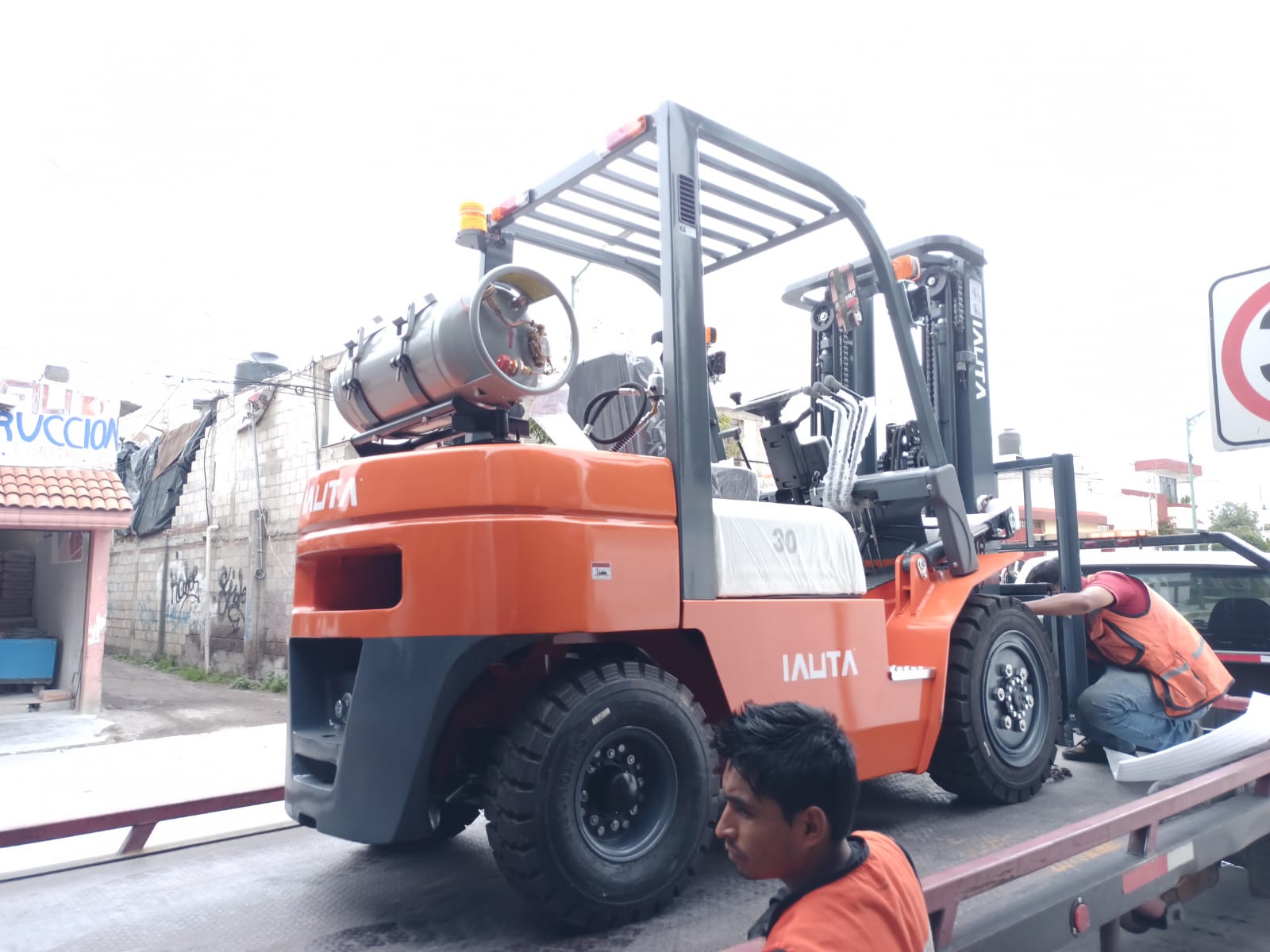
ensure equipment meets your operating conditions
We will recommend the most suitable equipment to you according to your needs.
guarantee the longevity of your machinery
Choose the best warranty options for your forklift’s needs
ensure equipment meets your operating conditions
We will recommend the most suitable forklift to you according to your needs.